Related video

Overview: Conquering the Ludo Board, Malaysian Style
Selamat datang, fellow Ludo enthusiasts! If you're reading this, chances are you've experienced the thrill, the frustration, and the sheer joy that comes with a game of Ludo. In Malaysia, Ludo isn't just a board game; it's a cultural staple, a go-to for family gatherings, festive seasons like Hari Raya and Chinese New Year, and even casual meet-ups at local mamak stalls. It's a timeless classic that transcends generations, bringing people together for a blend of luck, strategy, and friendly competition.
As a Lead Strategy Analyst and a lifelong board game aficionado, I've spent countless evenings with my family and friends across Kuala Lumpur, Penang, and Johor Bahru, strategizing over a Ludo board. I've seen firsthand how a well-placed block or a perfectly timed capture can turn the tide of a game. While Ludo is often perceived as purely a game of chance due to its reliance on dice rolls, I'm here to tell you that strategic thinking plays a far more significant role than most people realize. This comprehensive guide is designed specifically for Malaysian players, aiming to elevate your Ludo game from casual rolls to calculated victories.
We'll delve deep into the mechanics, uncover hidden strategies, and provide expert tips to help you dominate the Ludo board. Whether you're a seasoned player looking to refine your tactics or a newcomer eager to learn the ropes, this guide will equip you with the knowledge to play smarter, outmaneuver your opponents, and ultimately, win more games. Forget just rolling the dice; it's time to play with purpose!
So, grab your pawns, get ready to roll, and let's transform your Ludo experience. By the end of this guide, you'll be playing with a level of insight and expertise that will make you the envy of your family and friends. Let's get started, shall we?
Rules & Setup: The Foundation of Your Ludo Game
Before diving into advanced strategies, a solid understanding of Ludo's fundamental rules and setup is paramount. While most Malaysian households have their own slight variations, the core mechanics remain consistent. Mastering these basics is the first step towards becoming a Ludo champion.
The Ludo Board & Components
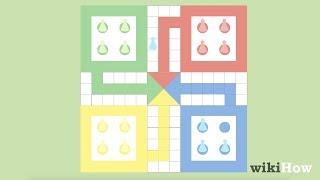
- The Board: A distinctive cross-shaped track, typically divided into four colored quadrants (red, blue, green, yellow). Each quadrant has a 'home' area, a 'starting' area, and a 'home path' leading to the central 'home' square.
- Pawns (Guli): Each player chooses a color and receives four pawns of that color. These pawns start in their respective 'starting' areas.
- The Die: A single six-sided die is used for movement.
Game Objective
The primary goal of Ludo is to be the first player to move all four of your pawns from your starting area, around the entire board, up your designated home path, and into the central 'home' square.
Game Setup
- Player Count: Ludo can be played by 2 to 4 players. Each player selects a unique color.
- Pawn Placement: All four of a player's pawns are placed in their corresponding colored 'starting' area on the board.
- Starting Player: Each player rolls the die once. The player with the highest roll goes first. In case of a tie, those players re-roll until a clear winner is determined. Play then proceeds clockwise.
Gameplay Mechanics
- Getting Pawns Out (Rolling a Six): To move a pawn from your starting area onto the main track, you must roll a '6'. Once a '6' is rolled, you place one of your pawns on its designated starting square (the colored square just outside your home area). Rolling a '6' also grants you an extra roll. If you roll three consecutive '6's, your turn ends immediately, and no pawns are moved (a common house rule to prevent excessive advantage).
- Moving Pawns: Once a pawn is on the main track, you move it clockwise around the board according to the number rolled on the die. You must move a pawn by the exact number shown on the die.
- Choosing Which Pawn to Move: If you have multiple pawns on the board, you can choose which pawn to move with your roll. This is where strategic thinking begins to come into play.
- Capturing Opponent's Pawns (Makan): If your pawn lands on a square occupied by an opponent's pawn, the opponent's pawn is 'captured' and sent back to their starting area. They must then roll a '6' again to re-enter the game.
- Safe Squares: Certain squares on the board are 'safe' and pawns resting on them cannot be captured. These typically include the colored starting squares (where pawns first enter the track) and often squares marked with a star or shield. Your own home path squares are also safe from opponents.
- Blocking (Membina Blok): If two of your own pawns occupy the same square, they form a 'block'. This block prevents any opponent's pawn from passing or landing on that square. Opponents must wait for the block to be broken or find an alternative route if available.
- Entering the Home Path: Once a pawn has completed a full circuit of the board, it enters its colored 'home path'. These are usually 6 squares leading to the central 'home' square. Pawns in the home path cannot be captured by opponents.
- Reaching Home: To move a pawn into the central 'home' square, you must roll the exact number required. For example, if your pawn is 3 squares away from home, you need to roll a '3'. If you roll a higher number, you cannot move that pawn into home and must use another pawn if available, or forfeit the move if no other valid move exists.
- Winning the Game: The first player to successfully move all four of their pawns into the central 'home' square is declared the winner!
These rules form the backbone of every Ludo game. While local variations may exist (e.g., specific safe squares, rules for rolling multiple 6s), understanding these core principles will prepare you for any Ludo challenge you encounter in Malaysia or beyond.
Strategy Guide: Masterful Moves for Malaysian Ludo Players
Ludo is a fascinating blend of chance and strategy. While the dice rolls introduce an element of unpredictability, smart decision-making can significantly swing the odds in your favor. Here, I'll share advanced strategies that I've refined over years of playing Ludo, especially in the competitive yet friendly environments common across Malaysia.
1. The Power of the '6': Not Just for Starting
Everyone knows you need a '6' to get a pawn out. But its power extends beyond that. A '6' gives you an extra roll, which is a massive advantage. Use this to your benefit:
- Prioritize Getting Pawns Out: In the early game, always aim to get as many pawns out as possible. Having multiple pawns on the board gives you more options for movement and reduces the impact of a bad roll on a single pawn.
- Chain Rolls: If you roll a '6', move a pawn, then roll another '6', use the second '6' to either move another pawn out or advance a pawn that can capture an opponent's piece or form a block. Don't waste the momentum.
2. Spreading Your Pawns: Don't Put All Your Eggs in One Basket
A common mistake is to focus on moving just one pawn around the board. This makes you predictable and vulnerable. Instead, practice spreading your pawns:
- Diversify Your Position: Try to have pawns at different stages of the board. One pawn might be close to your home, another in the middle, and one just starting out. This offers flexibility.
- Mitigate Risk: If one pawn is captured, you still have others actively moving and progressing. It reduces the 'all-or-nothing' feeling.
3. Offensive Play: The Art of the Capture (Makan)
Capturing an opponent's pawn is incredibly satisfying and strategically vital. It sends them back to square one, costing them valuable turns.
- Calculated Aggression: Don't just capture for the sake of it. Assess the risk. Is capturing an opponent's pawn worth exposing your own to immediate capture by another player? Sometimes, it's better to let an opponent pass if it means keeping your pawn safe.
- Target Key Pawns: If an opponent has a pawn very close to their home path, capturing it can be a huge setback for them. Prioritize these targets.
- Use Extra Rolls Wisely: If you capture a pawn and get an extra roll, use that roll to move the capturing pawn to a safer square or to advance another pawn.
4. Defensive Play: Building Blocks (Membina Blok)
Blocking is one of the most powerful defensive and offensive strategies in Ludo. Two of your pawns on the same square create an impenetrable barrier for opponents.
- Strategic Placement: Look for opportunities to create blocks on squares that are bottlenecks for opponents, or just before their home path entry. This can severely hinder their progress.
- Protect Your Leads: If you have a pawn far ahead, consider bringing another pawn alongside it to form a block and protect its leading position.
- Break Blocks When Necessary: Sometimes, to move a pawn into your home path, you might need to break a block you've formed. Weigh the pros and cons carefully.
5. Risk Management: When to Push, When to Protect
Every roll presents a decision. Understanding risk is key:
- Protect Pawns Nearing Home: Pawns that are close to entering their home path are extremely valuable. Avoid exposing them to capture at all costs. It's often better to move a pawn that's just started out, even if it means risking it more.
- Know When to Sacrifice: In rare situations, you might intentionally move a pawn into a position where it can be captured, if doing so allows another, more crucial pawn to reach a safe spot or enter home. This is an advanced tactic and requires careful calculation.
- The 'Run Away' Strategy: If an opponent's pawn is hot on your trail, try to move your threatened pawn to a safe square (like your own starting square or another designated safe spot) if possible, rather than risking capture.
6. The Home Stretch: Precision and Patience
Getting your pawns into the central home square requires exact rolls, which can be frustrating. Patience is a virtue here.
- Don't Rush: If you need a '3' and roll a '4', don't force a move that isn't optimal. Use the '4' on another pawn if you have one.
- Clear the Path: Ensure your home path is clear of your own pawns if you need specific rolls for others.
7. Observing Your Opponents
Pay attention to your opponents' board state:
- Pawn Count: How many pawns do they have out? How many are left in their starting area?
- Threats: Are any of their pawns in a position to capture yours?
- Goals: Which pawn are they trying to get home?
By integrating these strategies into your Ludo gameplay, you'll move beyond mere luck and start playing with a tactical depth that will surprise your opponents and lead to more consistent victories. Remember, practice makes perfect, and every game is an opportunity to learn and refine your approach!
Odds & Statistics: Understanding Ludo's Probabilities
While Ludo is undeniably a game of chance, understanding the underlying probabilities of dice rolls can empower your strategic decisions. It helps you assess risks and make more informed moves, even when luck isn't on your side. After all, even in games of chance, probability dictates long-term outcomes.
Dice Roll Probabilities
A standard Ludo game uses one six-sided die. Each face (1, 2, 3, 4, 5, 6) has an equal chance of appearing.
- Probability of Rolling Any Specific Number: 1/6 (approximately 16.67%). This means you have a 1 in 6 chance of rolling a '6', a '1', or any other number.
- Probability of Not Rolling a Specific Number: 5/6 (approximately 83.33%).
- Probability of Rolling a '6' in X Rolls: This increases with more rolls. For example, the chance of rolling at least one '6' in two rolls is significantly higher than in one roll.
As per fundamental probability theory, the chance of rolling any specific number on a fair six-sided die is 1 in 6. This constant probability influences every strategic choice you make.
Impact of Luck vs. Skill
Ludo is often cited as a game where luck plays a huge role, and this is true. A string of bad rolls can cripple even the best strategy, and a lucky '6' at the right moment can save a game. However, skill comes into play by:
- Optimizing Good Rolls: When you get a favorable roll, a skilled player knows how to maximize its impact – whether it's capturing an opponent, forming a block, or moving a crucial pawn to safety.
- Minimizing Damage from Bad Rolls: A skilled player can mitigate the negative effects of unfavorable rolls by choosing the least damaging move, even if it means sacrificing a less important pawn.
- Strategic Positioning: Placing your pawns in advantageous positions increases the chances that any given roll will be beneficial, or at least less detrimental.
Expected Value of Moves
While you can't predict the next roll, you can make decisions based on the expected value of your moves. For instance:
- If moving a pawn exposes it to capture but also gives you a 1/6 chance of capturing an opponent's high-value pawn, is it worth the risk?
- If you have two pawns, one 2 steps from home and another 10 steps from home, and you roll a '2', moving the pawn 2 steps from home has a higher 'expected value' in terms of game progression, assuming no immediate threats.
Understanding these statistical underpinnings helps you transition from purely reactive play to proactive, calculated risk-taking. It's about playing the odds over the long run.
| Factor | Probability/Value | Strategic Implication |
|---|---|---|
| Rolling a '6' | 1 in 6 (16.67%) | Crucial for starting & extra turns; prioritize getting pawns out. |
| Rolling any specific number | 1 in 6 (16.67%) | All numbers equally likely; plan for various outcomes. |
| Average Roll Value | 3.5 | Consider average progression; don't rely solely on high rolls. |
| Chance of '6' in 2 rolls | Approx. 30.56% | Increases likelihood of starting or getting extra moves. |
| Capturing an opponent | Variable (depends on board state) | High reward, assess risk of counter-capture. |
| Forming a block | Variable (depends on board state) | High defensive/offensive value; reduces opponent's options. |
By internalizing these statistics, you'll gain a deeper appreciation for the game's mechanics and make more robust decisions, even when the dice seem to have a mind of their own. It's not about eliminating luck, but about leveraging strategy to tilt the odds in your favor.
How to Play Ludo: A Step-by-Step Guide for New & Returning Players
Embarking on a Ludo journey is straightforward, but knowing the precise flow of play ensures a smooth and enjoyable experience for everyone. This step-by-step guide will walk you through a typical Ludo game, from setup to victory, tailored for Malaysian players who often enjoy this game during festive seasons and family gatherings.
Step 1: Game Setup (Sediakan Papan)
- Choose Colors: Each of the 2 to 4 players selects a distinct color (Red, Blue, Green, or Yellow).
- Place Pawns: All four pawns of your chosen color are placed in your corresponding starting area (the large colored square on the board).
- Select the Die: Ensure you have one standard six-sided die.
- Determine First Player: Everyone rolls the die. The player with the highest roll starts the game. If there's a tie, only those tied re-roll until a single highest number emerges. Play proceeds clockwise from the starting player.
Step 2: Getting Pawns Out of the Starting Area (Mula Bergerak)
- Roll a '6': To move a pawn from your starting area onto the main game track, you must roll a '6'.
- Place Pawn: When a '6' is rolled, you take one of your pawns from the starting area and place it on its designated starting square on the main track (this is usually the colored square just outside your home area).
- Extra Roll: Rolling a '6' also grants you an additional roll. You can use this extra roll to move the pawn you just brought out, or if you have other pawns already on the board, you can move one of them. If you roll another '6', you get yet another extra roll. (Note: Some house rules might limit consecutive '6's, e.g., three '6's in a row might end your turn without movement).
- No '6'?: If you don't roll a '6', your turn ends, and play passes to the next player. You must wait for your next turn to try and roll a '6' again.
Step 3: Moving Pawns on the Main Track (Gerakkan Guli)
- Roll the Die: On your turn, roll the die.
- Choose a Pawn: Select one of your pawns that is currently on the main track.
- Move Exactly: Move the chosen pawn clockwise around the track by the exact number of spaces indicated on the die. You cannot move less or more than the number rolled.
- No Valid Move?: If you have no pawns that can make a valid move (e.g., all pawns are blocked, or you need an exact number to enter home but rolled too high and have no other pawns to move), you forfeit your turn.
Step 4: Capturing Opponent's Pawns (Makan Guli Lawan)
- Land on Opponent: If your pawn lands on a square already occupied by an opponent's pawn, the opponent's pawn is 'captured'.
- Return to Start: The captured pawn is immediately sent back to its owner's starting area.
- Opponent Re-rolls '6': The opponent must then roll a '6' on a subsequent turn to get that pawn back onto the main track.
- Safe Squares: Remember, pawns on designated 'safe' squares (like your own starting square or starred squares) cannot be captured.
Step 5: Forming Blocks (Membina Blok)
- Two Pawns on One Square: If you manage to move two of your own pawns onto the same square, they form a 'block'.
- Impassable Barrier: An opponent's pawn cannot pass over or land on a square occupied by a block. This forces them to wait or find another route.
- Breaking Blocks: To move one of the pawns from a block, you simply move it as normal. The block is then broken.
Step 6: Entering the Home Path (Masuk Laluan Rumah)
- Complete Circuit: Once a pawn has made a full circuit around the main track, it can enter its corresponding colored 'home path'. This path leads directly to the central 'home' square.
- Safe from Capture: Pawns on the home path are safe from being captured by opponents.
Step 7: Reaching the Central Home Square (Masuk Rumah)
- Exact Roll Required: To move a pawn into the central 'home' square, you must roll the exact number needed to land on it. For example, if a pawn is 3 spaces away, you must roll a '3'.
- Over-Roll: If you roll a number higher than what's needed to enter home, you cannot move that pawn into home. You must use another pawn if you have one, or forfeit the move if no other valid moves are available.
Step 8: Winning the Game (Menang!)
The first player to successfully move all four of their pawns into the central 'home' square is the winner! Congratulations, you've mastered the Ludo board!
Practice these steps, apply the strategies discussed earlier, and you'll soon find yourself enjoying Ludo not just as a game of chance, but as a delightful challenge of tactical prowess.
Expert Verdict: Why Ludo Remains a Malaysian Favorite
After countless hours spent rolling dice and strategizing on Ludo boards across Malaysia, from bustling KL cafes to serene kampung homes, my verdict is clear: Ludo is more than just a pastime; it's a dynamic, engaging, and surprisingly strategic board game that truly shines in a social setting.
Its enduring popularity in Malaysia isn't just due to its accessibility and simple rules, but also its unique blend of luck and player interaction. Unlike many casino games where the house edge is a constant factor, Ludo is a pure player-vs-player contest where your wits and choices directly impact the outcome. There's no hidden house advantage; it's all about how you play the game.
My experience has shown that while a lucky '6' can provide a momentary boost, consistent application of smart strategies – such as spreading your pawns, forming timely blocks, and executing calculated captures – is what ultimately separates the casual player from the Ludo master. The satisfaction of outmaneuvering an opponent with a well-planned move, or strategically sacrificing a pawn to secure a crucial advantage, is immensely rewarding.
For Malaysian players looking for a game that balances social interaction with tactical thinking, Ludo is an absolute must-play. My recommendation is to embrace both the joy of the roll and the challenge of the move. By applying the strategies outlined in this guide – especially the focus on spreading pawns and judicious blocking – you'll not only enhance your gameplay but also elevate the fun for everyone involved. It's a fantastic game for family bonding and friendly competition, perfect for your next gathering. So, roll the dice with confidence, play with purpose, and enjoy the timeless appeal of Ludo Malaysia!